Samuel Shearer

Samuel Shearer

Samuel Shearer

Assistant Professor of African and African American Studies
PhD, Duke University
View All People

contact info:

  • Email: sshearer@wustl.edu
  • Phone: 314-935-8740
  • Fax: 314-935-9390
  • Office: McMillan Hall 234

mailing address:

  • Washington University
    Campus Box 1109-0137-02
    One Brookings Drive
    St. Louis, MO 63130
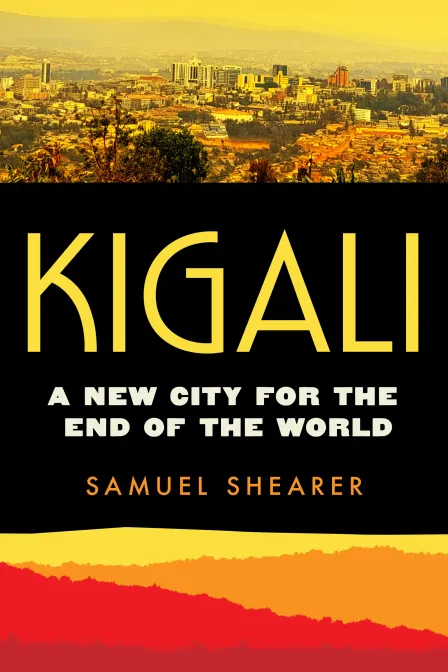
Samuel Shearer’s research and teaching places ethnography, African and African American Studies in conversation with urban studies to account for the future of urban life in Africa and the United States. His first book, Kigali: a New City For the End of the World (University of California Press 2025) is an ethnography of efforts to find “green” market-driven urban solutions to the twin crises of capital and ecology and popular alternatives to sustainable urbanism in Kigali, the capital city of Rwanda.  His work has also been published in several journals and edited volumes and can be sampled here. In the Department of African and African American Studies, he teaches courses on urban theory, racial capitalism, and popular culture from a global, interdisciplinary, perspective.   
 
Shearer received his PhD from the Department of Cultural Anthropology at Duke University in 2017. Before joining WashU’s Department of African and African American Studies, he was a Mark Steinberg Weil Postdoctoral Fellow in Urban Humanities in The Center for Humanities at Washington University.   
Kigali A New City for the End of the World

Kigali A New City for the End of the World

A free ebook version of this title is available through Luminos, University of California Press's Open Access publishing program. Visit www.luminosoa.org to learn more.

In the first decade of the twenty-first century, the government of Rwanda hired American and Singaporean design firms to transform the image of Kigali from a wounded city into a competitive destination for foreign investment. The firms produced promotional images of a post-conflict tabula rasa waiting to be rebuilt by foreign investors as an urban solution to climate change. However, to make this marketing image real, much of the actual city would need to be destroyed and its residents converted to consumers of green housing and service delivery systems.
 
Kigali is an ethnography of a city that is being destroyed so that it can be rebuilt for the end of the world. Drawing on years of ethnographic fieldwork with Kigali residents as they navigate the catastrophes induced by sustainable urbanism, this book offers a searing critique of capitalist solutions to climate change and an account of the city’s popular alternatives to sustainable urbanism.